Does Cooking Erase the Canned Tomato Quality Gap?
I simmered Selection, Primo, and Mutti into pomodoro and served them blind. My mom — a serious cook — could not tell the difference.
Canned Tomatoes — Part 2 of 2 Culinary Microscope · Toronto
Part 1 recap: In our raw tasting, Primo surprised us as the best buy relative to its price — but Mutti had a decisive edge on the one quality that mattered most: a clean, metal-free flavor that the cheaper brands couldn’t match. That article is here if you missed it. This one asks a single follow-up question: does any of that survive 40 minutes on the stove?
Three brands — Selection ($2.25), Primo ($2.49), and Mutti ($5.79) — all purchased in Toronto. Same taster throughout: my mom, who has been cooking seriously for years.
The Method
I kept it simple and controlled. Any complexity would give the cooking — rather than the tomatoes — somewhere to hide.
- Equal quantities from each can, tomatoes crushed by hand directly into three separate pans
- Equal amounts of extra virgin olive oil added to each
- Salt adjusted to account for sodium already present in Selection and Primo — Mutti has almost none
- All three simmered uncovered on the same stove at the same heat for 40 minutes
- Equal portions of spaghetti finished in each sauce, then plated blind
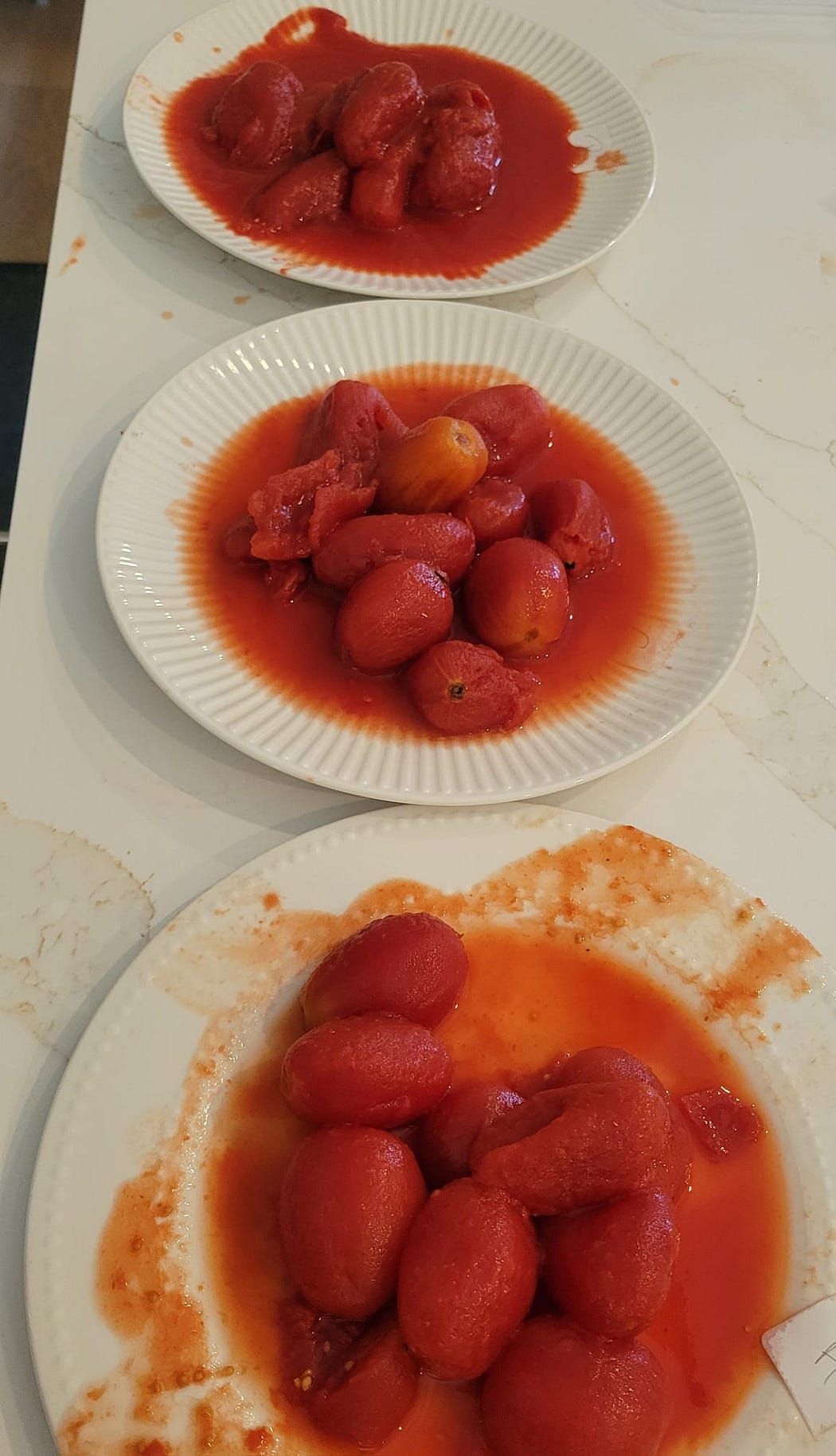
What Happened During Cooking
Something unexpected occurred while the sauces were still on the stove. My mom kept insisting that the pot on the right had developed a beautiful texture and was obviously Mutti.
It was Selection — the cheapest brand.
Texture-wise, the cheap and premium brands performed similarly in the pan, both reducing to a decent consistency. Primo, the mid-tier option, remained noticeably watery throughout — the sauce never fully came together, and the pasta barely clung to it.
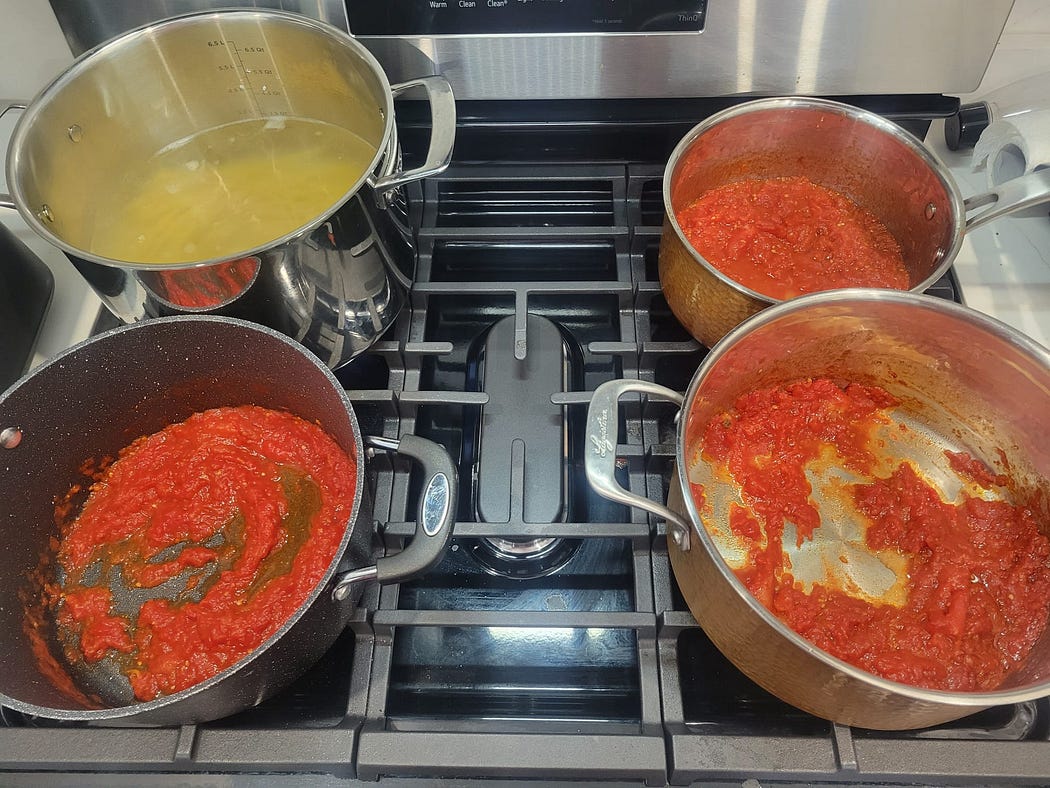
“She tried hard. She concentrated. She went back for second tastes. She could not tell the difference between the three finished pastas.”
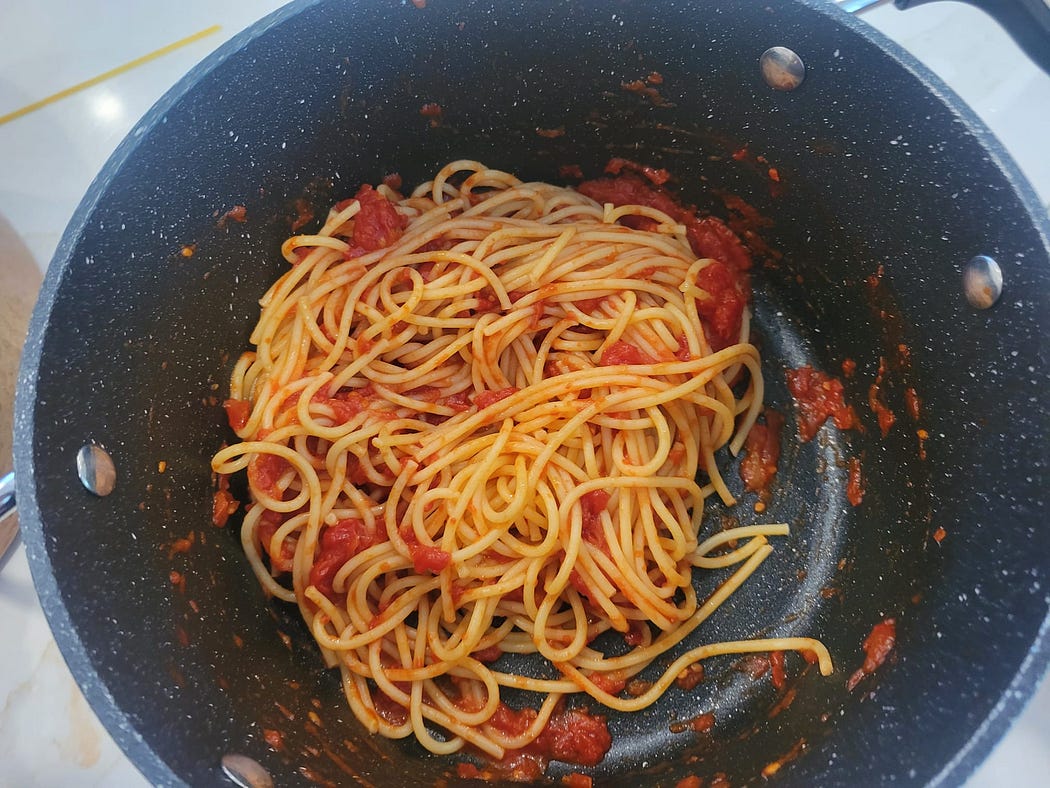
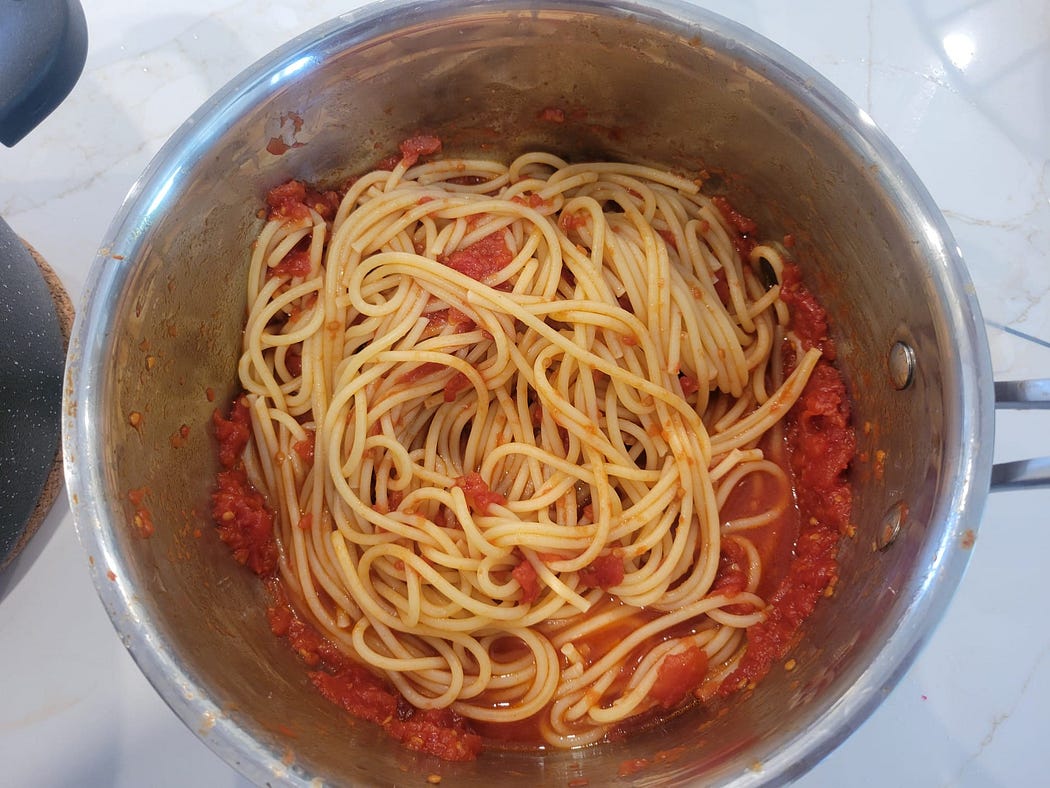
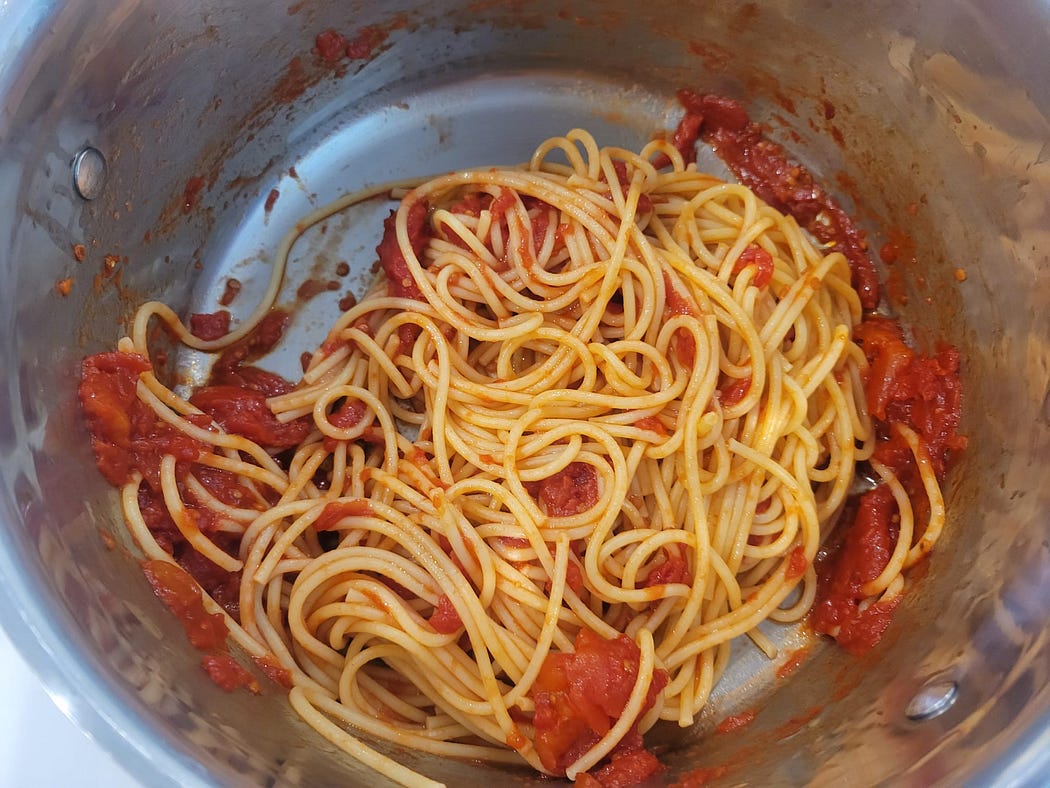
I repeated the test myself. Mutti had a very sight edge — a barely perceptible brightness and cleanliness — but the gap had shrunk dramatically from what we’d tasted raw. A $2.25 can of Selection, simmered for 40 minutes with good olive oil and properly salted pasta water, produced a plate of pasta that an experienced cook could not distinguish from one made with $5.79 Mutti.
Why Does Heat Erase the Gap?
This isn’t a fluke or a limitation of the experiment. There are specific, well-understood mechanisms at work.
- The volatile aromatic compounds responsible for Mutti’s clean, bright raw flavor evaporate during simmering — you lose the very thing you paid for
- The citric acid in cheaper brands — which contributed to their harsh, one-dimensional acidity raw — becomes almost imperceptible after sustained heat
- Concentration through evaporation intensifies even a mediocre tomato’s flavor, effectively doing the job that premium growing conditions did for Mutti
Each of these works in the same direction: toward convergence. By the time the dish reaches the plate, the distance between a $2.25 can and a $5.79 one has been compressed at every stage of cooking.
The Verdict
The quality gap between brands is real — but it is not cooking-proof.
The difference shrinks when:
- Simmering for 30+ minutes
- Making bolognese or slow braises
- Tomato is one flavor among many
- Cooking for a crowd where cost matters
Surprisingly, Primo was the best performer on the raw test but the weakest in the cooked test despite being mid-priced. The wateriest sauce, the pasta that clung the least. Selection at $2.25 outperformed it in the pan.
What this tells us is that price alone is a poor guide — and that context is everything. There is a general connection between cost and quality, but this experiment is proof that the exceptions are real, consistent, and worth knowing about. The most reliable thing you can do is run the same test yourself, with the brands available at your own supermarket. The results might surprise you the same way they surprised us.
This is part of Culinary Microscope — a blog dedicated to actually testing the ingredients and techniques that most food writing just opines about. Every claim here came from a real experiment in a real kitchen. When the results surprised me, I published them anyway.