The canned tomato blind test: Is premium worth it? I tested Mutti ( Part 1 of 2)
The blind test that changed how I shop for tomatoes
Canned Tomatoes — Part 1 of 2
I tested cheap, mid-tier, and Mutti straight from the can. The ingredient lists told the story before we took a single bite.
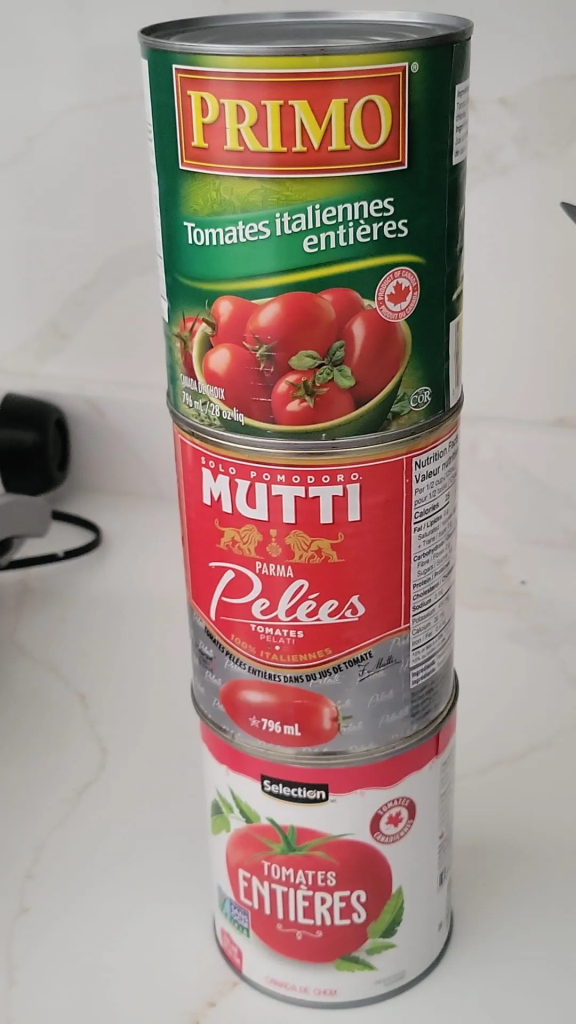
You’ve probably grabbed whatever canned tomatoes were on sale without thinking twice. I did too — until I started wondering whether the premium brands actually justify costing three times more. So I designed two experiments to find out.
This is Part 1: the raw tasting. Three brands, straight from the can, no heat, no mercy. Part 2 covers what happens when you cook them — and the results are genuinely surprising.
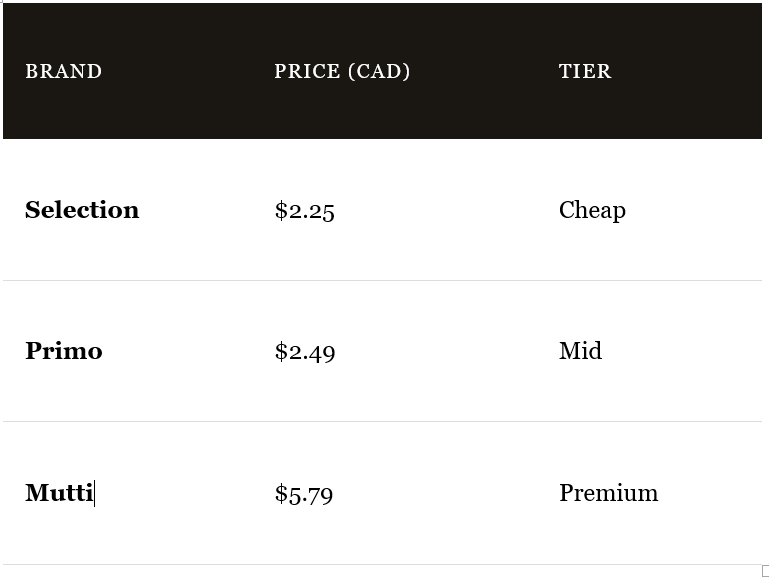
The brands I tested, all purchased in Toronto:
The taster for both experiments: my mom, who has been cooking seriously for years and has developed a genuinely discerning palate.
What’s Actually Inside a Canned Tomato?
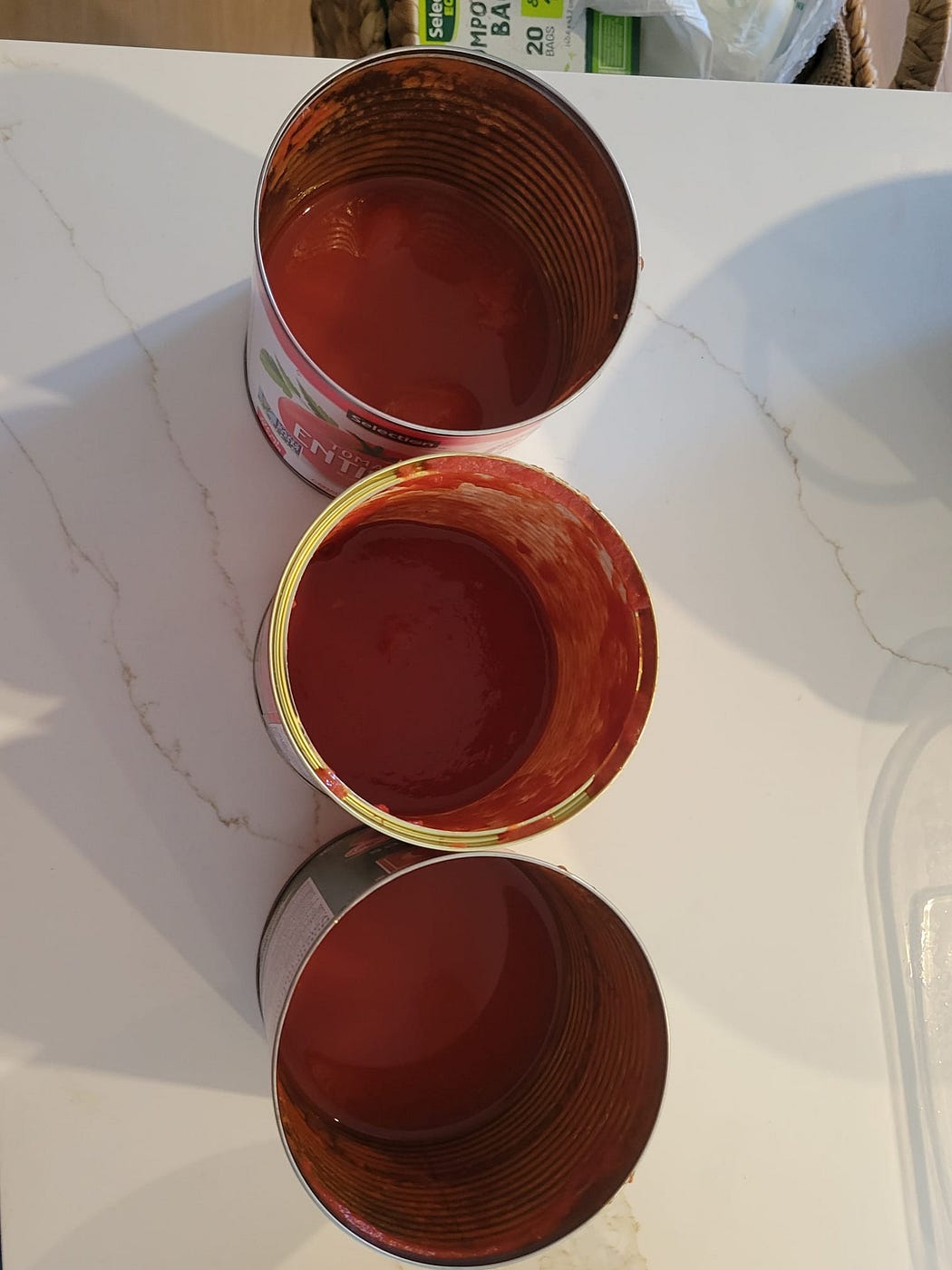
Most people don’t think twice about the liquid surrounding canned tomatoes, assuming it’s just water with a bit of tomato flavor. It’s not. That liquid is the natural juice released when the tomatoes are blanched, peeled, and packed. The better the tomato — the riper, the denser, and the more carefully grown — the richer and more concentrated that juice will be. An under ripe tomato releases thin, watery juice. A vine-ripened tomato at peak maturity releases something closer to concentrated tomato essence.
This distinction ended up being one of the most visible differences between my three brands before a single bite was taken.
What the Ingredient Lists Revealed
Before tasting anything, I checked the ingredient lists on all three cans. The difference was immediate and telling.
Selection and Primo both contained calcium chloride and citric acid in addition to tomatoes and tomato juice. They also both contained 200mg of sodium per serving.
Mutti contained only tomatoes, tomato juice, and 5mg of sodium — essentially nothing else.
Why this matters:
Calcium chloride is a firming agent added because the tomatoes aren’t naturally firm enough to survive the canning process intact — a signal of inferior quality. Citric acid is added to boost acidity artificially, extend shelf life, and preserve color. Mutti needs neither because its tomatoes are harvested at full ripeness, processed within hours of picking, and dense enough to hold their structure without chemical assistance.
The sodium difference introduced a real methodological complication: sodium suppresses bitterness and enhances natural flavors, meaning Selection and Primo had a built-in flavor amplifier that Mutti didn’t. I kept this in mind throughout the tasting.
The Raw Tasting
Tasting canned tomatoes raw might seem unusual, but it serves a real purpose. Some applications rely on barely-cooked or completely raw tomatoes — think Mexican salsa or the sauce accompanying Saudi Arabian kabsa where the tomato character needs to come through undiluted. Raw tasting also gives the most unfiltered read on pure ingredient quality before heat can mask or equalize differences.
Opening the Selection can, the difference was visible immediately. The liquid was noticeably watery, and one tomato had a greenish tinge — a sign of underripe fruit. On tasting, my mom identified metallic taste and poor quality on the first bite. The tomato flavor was flat, thin, and slightly off.
“Primo and Selection both had watery juice — but tasting Primo and Mutti blind, my mom found both decent and couldn’t reliably distinguish them.”
The added sodium in Primo may have been doing some work here, narrowing a gap that was actually larger than the blind test suggested.
When I tasted all three knowing which was which, the picture became clearer. Selection was obviously inferior — the metallic note and flat flavor were unmistakable. Mutti was noticeably cleaner, with no metallic aftertaste and a purer, more concentrated tomato flavor. Primo sat somewhere in between.
One unexpected finding: inside the Mutti can, I found what appeared to be a small dark seed or stem piece alongside the tomatoes. Worth noting — premium price doesn’t guarantee perfect quality control on every can.
Raw Verdict
The difference between Mutti and Selection is significant enough to matter in any application where the tomato isn’t being cooked for a long time. In those applications, the $3.54 premium over Selection is justified.
Somehow the difference between the mid-tier brand and premium in my opinion doesn’t justify doubling the price. The only criteria where the difference is big is the nonmetallic taste.
→ Part 2
Does cooking erase the quality gap? I simmered all three into pomodoro and tossed them with spaghetti. My mom tasted blind. She could not tell the difference. Here’s the science behind why.
This is part of Culinary Microscope — a blog dedicated to actually testing the ingredients and techniques that most food writing just opines about. Every claim here came from a real experiment in a real kitchen. When the results surprised me, I published them anyway.