Does Cumin Brand Actually Matter? ( Part 1 of 2)
We ground two brands fresh one budget friendly and one premium, applied them to the same unheated Lebanese carrot dish, and served them blind. The results were not what we expected.
Spice Series — Cumin, Part 1 of 2
Culinary Microscope · Toronto
Cumin is one of the oldest spices in the world. Seeds recovered from a submerged Neolithic settlement in the eastern Mediterranean have been dated from 8,000 years old.
Today India produces over 70% of the world’s cumin supply — roughly 900,000 metric tonnes annually — followed by Turkey, China, and Iran. The US, Bangladesh, and Canada are the top three importers. But the story has a dark side.
On adulteration: Cumin is one of the most commonly adulterated spices in the world, with producers known to bulk out their product with grass, stone dust, and in some cases ground peanut shells. In 2014, the US Food and Drug Administration pulled 20 batches from shelves after manufacturers were found to have added peanut shells to the powder. When you buy a cheap jar of cumin, you may not be buying pure cumin at all.
Which raises the question we brought into this experiment: does brand actually matter? After all, even if it’s cheaper, isn’t it still cumin? We tested two brands — one expensive, one budget friendly— from our local supermarket on the same carrot dish, served blind. Here is what we found.
Why Seeds, Not Powder
My first instinct was to run the experiment between budget friendly seeds and a good brand’s powder. Then I flagged a problem. With ground cumin, you never know when it was milled — it could be anywhere between two months and two years old. Whole spices lose significant flavor after six months to a year of storage, and powder is far more vulnerable than seeds. Running that experiment would mean testing freshness as much as brand quality — two variables instead of one.
So I switched entirely to seeds, ground fresh for each batch immediately before the experiment. Unless the seeds were stored since the Neolithic age, the age variable is almost neutralized.
The Brands
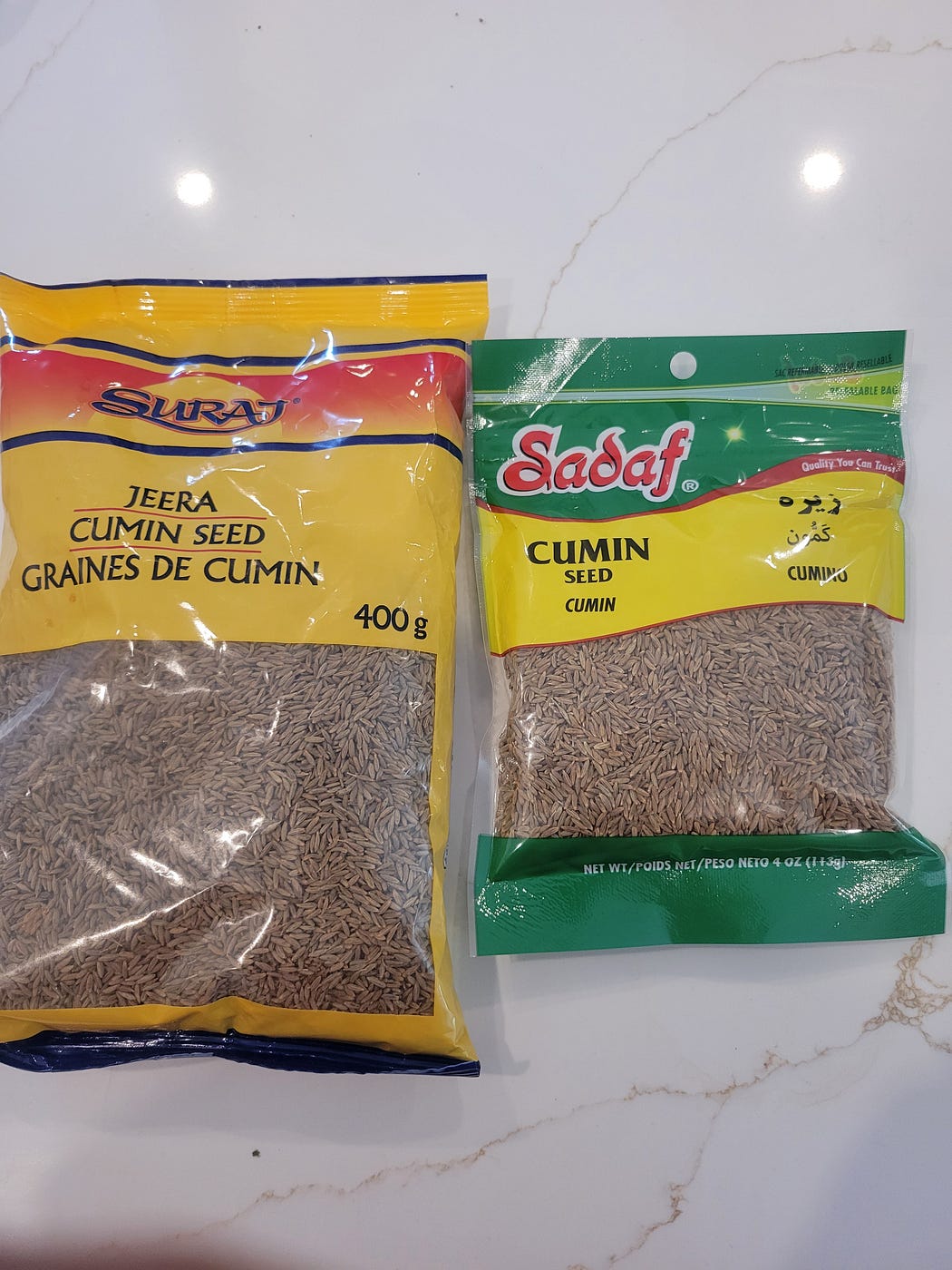
Suraj — budget friendly
$0.04 CAD per teaspoon
$6.00 for 400g
Sadaf — Premium
$0.10 CAD per teaspoon
$4.79 for 113g
Nearly three times the price per teaspoon. Worth noting: one teaspoon of cumin, like most spices, weighs roughly 2–3 grams — not the 5 grams of something denser like salt. A dish serving three to four people uses about one teaspoon of cumin, meaning the price difference per dish remains almost negligible even at three times the per-gram cost.
The Smell Test
After grinding each batch fresh, my mom and I smelled both side by side. We could not detect a difference. This surprised us — and becomes more interesting in light of what happened next.
Cold Application Results
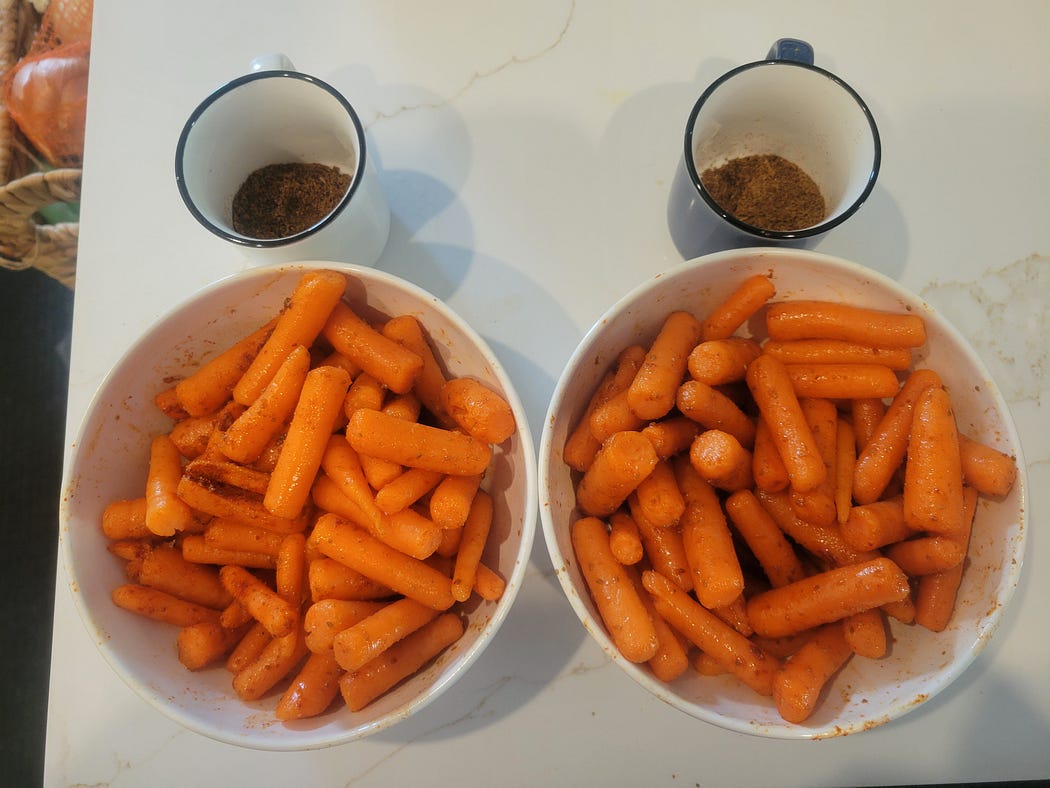
The recipe: baby carrots, ground cumin, smoked paprika, lemon juice, and salt — identical quantities across both batches. This appetizer is a staple in Lebanese cuisine, often served alongside drinks, with a flavor profile that shares something with Mexican preparations — likely no coincidence given cumin’s journey from the Middle East to the Americas via Spanish colonizers.
“Same recipe. Opposite flavor hierarchies.”
From the first bite, my mom detected a noticeable difference. She initially thought one batch had been seasoned more heavily — both were identical. When I tasted both, what struck me was this: in the cheap cumin version, the smoked paprika completely dominated the dish. In the Sadaf version, the paprika receded and the cumin came forward clearly.
The Finding
We rated the difference at +1 out of 10 in favor of the premium brand — noticeable but not dramatic. Think of it as the difference between a dish that tastes right and a dish that tastes like itself. For a few cents per serving, the premium cumin shifted the entire flavor balance of the dish. The lemon and paprika are both assertive ingredients. We expected them to shrink the gap considerably. They didn’t.
Why might this happen?
Two possible explanations — possibly both at work simultaneously. Premium cumin may simply contain a higher concentration of cumin aldehyde, the primary aromatic compound responsible for cumin’s characteristic flavor. Alternatively, adulteration in cheaper brands — even subtle dilution with inert material — reduces the effective concentration of flavor compounds per teaspoon regardless of the cumin’s inherent quality. We cannot determine which mechanism is dominant from tasting alone.
Verdict
For cold applications, the premium cumin clearly wins. The flavor is stronger, more directional, and changes the character of the dish in a way that costs almost nothing extra per serving.
The question now is what happens under heat. Cumin is famous for what fire does to it — the aromatics shift, the earthiness deepens, and the flavor becomes something almost unrecognizable from the raw seed. Will a cheap brand close the gap when the pan gets hot, the way cheap tomatoes did in a long simmer?
Next: The same two brands in a Mexican beef bowl. Same question, different conditions. If the canned tomato experiment taught us anything, heat has a way of rewriting the rules entirely.
This is part of Culinary Microscope — a blog dedicated to actually testing the ingredients and techniques that most food writing just opines about. Every claim here came from a real experiment in a real kitchen. When the results surprised me, I published them anyway.