Fresh Lemon vs. Lemon Concentrate – The Most Surprising Blind Test
Bottled concentrate added smooth, clean acidity. Fresh lemon hit like someone shouting in your ear.
Before I go into the results, I usually write a general introduction about the ingredient I’m testing – covering a detailed look at the product and a bit of history. Since the results were so counterintuitive, I’m going to dedicate a separate article to that and get straight to the meat of it.
The one detail that adds a lot of mystery to this experiment is that I used the Canadian brand called Selection – the second cheapest overall brand in Toronto, just after the one called No Name. What a creative name! The price for a 946ml bottle is 2.79 cad compared to Fresh lemons that cost 5.99 cad for a bag of 2lbs. 2lbs yields around 240ml juice. So if we do the math concentrate is 8 times cheaper!
So the dish I’m tackling is Lebanese sabanekh w riz (spinach and rice), made of spinach, ground meat, onion, lots of garlic, and coriander, and served with a wedge of lemon. Although the lemon is added only at the end, it’s the backbone of the dish – it’s really the component that elevates the whole thing. Without lemon, it tastes flat and simply bitter from the spinach. But when you add lemon, it brightens the whole dish. Sabanekh w riz leans on it, and dishes like Mloukhiye lean on it even harder. Suha’s dishes’s ( A Lebanese You tuber that shares recipes and has 500k subscribers) frozen Mloukhiye recipe, for reference, calls for roughly a cup of lemon for every 500g of Mloukhiye. At that scale, the type of lemon you use isn’t a minor detail – it’s a major ingredient.
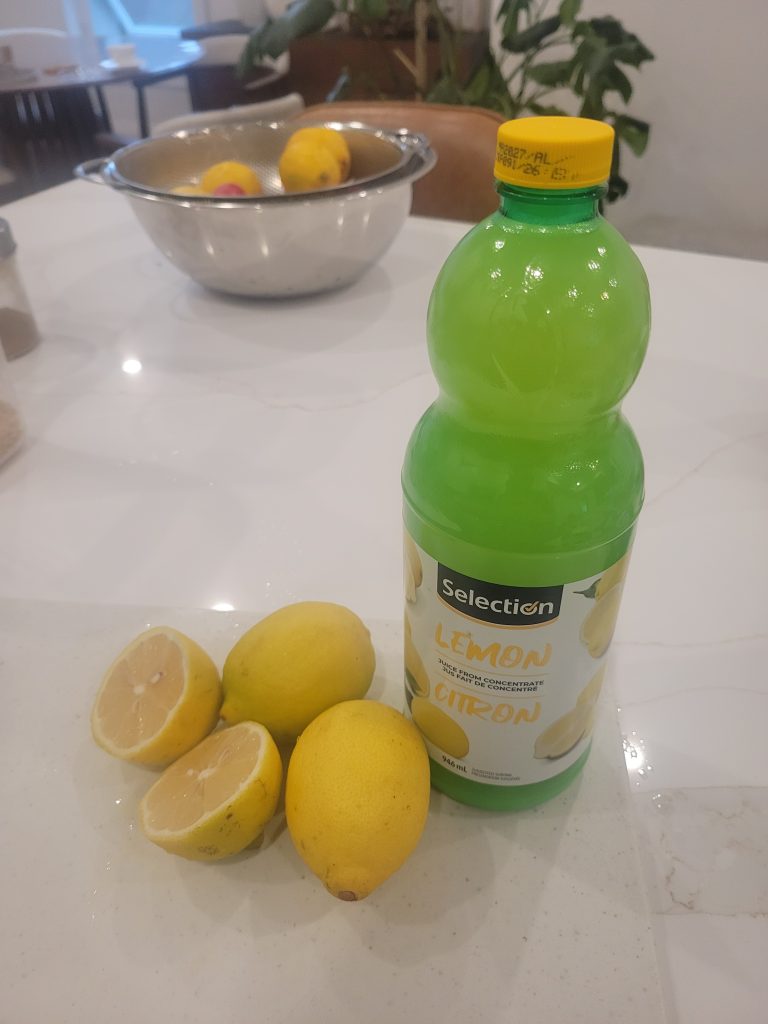
So the assumption going in was simple: freshly squeezed lemon would win, easily, against bottled concentrate. Fresh is supposed to be brighter, cleaner, more “real.” Bottled concentrate is the compromise you make when you’re out of fresh, or feeling lazy.
The setup
We made a batch of sabanekh w riz and served two equal portions from it. My mom was so convinced that concentrate tastes bad that she told me to serve small portions, because she didn’t want to throw the food away. She was definitely in for a surprise!
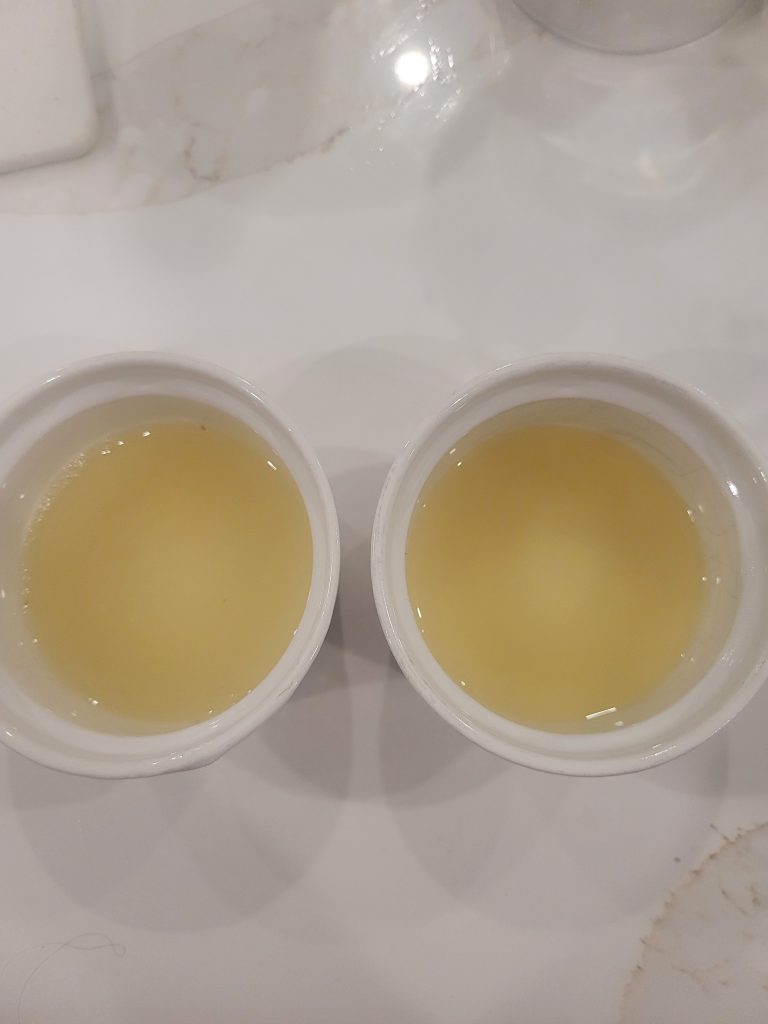
Off the heat, we added one tablespoon of lemon to each – one fresh-squeezed, one from bottled concentrate. Before tasting, we smelled both on their own. The concentrate smelled noticeably artificial – sharp, slightly chemical, the kind of smell that makes you second-guess using it at all. The fresh lemon smelled like, well, fresh lemon. Clean, bright, exactly what you’d expect. Based on smell alone, this wasn’t going to be close.
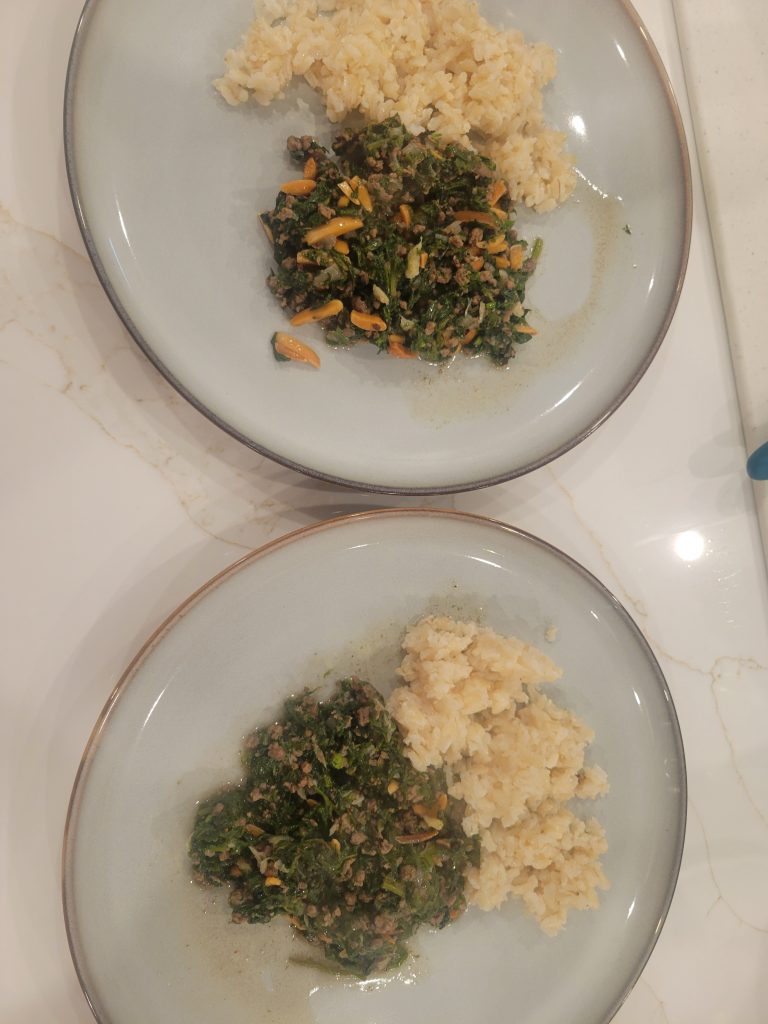
The result
Let me share how my mom, our blind taster, reacted when she tried both.
She tasted the concentrate first and, to my surprise, didn’t react badly or say it tasted fake. Then, the moment she tasted the fresh one, she turned to me the way she does when I wake her up from a nap after a tough day at work to ask about my blog ideas — the kind of face that looks almost deformed from how annoyed she is. And she screamed, “THAT’S THE CONCENTRATE!
You can’t believe how shocked I was when I heard that – and it was even funnier because, before running the experiment, she’d insisted many times that the results would be too obvious. She’d say things like, “Lemon concentrate won’t enter my house,” or “I can tell the difference without even tasting it”…
When it was my turn to taste, I clearly preferred the concentrate, as it brought a very nice touch of acidity. The fresh one had more character – a more distinctive lemony taste – but it clearly had too much character.
Two visitors came and were skeptical about the results so also tested
When we shared the results with the visitors they were very intrigued and skeptical. So I proposed them to test. After they had the two samples I asked what they think and there was a minute of silence retaking bites and a face expression of someone solving a difficult SAT problem.
One tester pointed to the fresh Lemon sample and said that it tastes stronger and that this must be the concentrate, echoing about how we felt it’s aggressive. The other tester hesitated and gave a slight advantage to the real Lemon sample. One of them also said that from the same sample one bite had a lot of lemon and the other had less. This points out to a limitation of the analysis. Although I did mix both samples the place where the tablespoon of lemon landed has a higher concentration, whereas the other bites even when mixed taste less Lemon dominant. That’s a valid limitation but we can still deduce many things about the results.
Verdict
Out of 4 testers (3 blind testers and myself), 3 preferred the concentrate. It was clear now that what the media says about Lemon concentrate is totally exaggerated – claiming that it’s so artificial and tasteless.
In my experiment comparing cheap vanilla ice cream versus Häagen-Dazs, we actually found that there wasn’t real milk in the budget option. But it clearly tasted creamy. Here, the lemon was heavily processed, but it still gave a very smooth touch of acidity. It seems that chemistry is doing a really good job at making food taste better. Just look at the ingredients of the Parlour vanilla that I posted in my article — it reads like a chemistry class!
Next time you’re squeezing fresh lemon onto a finished dish, it might be worth giving your shoulder a break and grabbing the bottle from your fridge instead!